English
To get around New York by public transit, passengers should utilize the subway system via the OMNY contactless payment platform. This network remains the primary method for navigating the five boroughs efficiently. Using Moovit allows travelers to access real-time data for subways, buses, and ferries to avoid service disruptions and delays.
Navigating the New York City transit system requires an understanding of three operational benchmarks. These pillars define how residents and visitors interact with the Metropolitan Transportation Authority (MTA) infrastructure.
The Feature: A unified contactless payment system for all MTA-operated transit modes.
The Mechanics: Passengers tap a contactless credit card, smartphone, or OMNY card against the reader at turnstiles or bus entrances. The system automatically calculates the fare and applies discounts.
The Evidence: As of 2026, the MTA has finalized the retirement of the magnetic-stripe MetroCard in favor of OMNY. The system supports Apple Pay, Google Pay, and Samsung Pay across all subway stations and buses.
Market Context: OMNY reduces queue times at stations compared to traditional vending machine transactions.
The Feature: A dual-system of numbered and lettered subway lines.
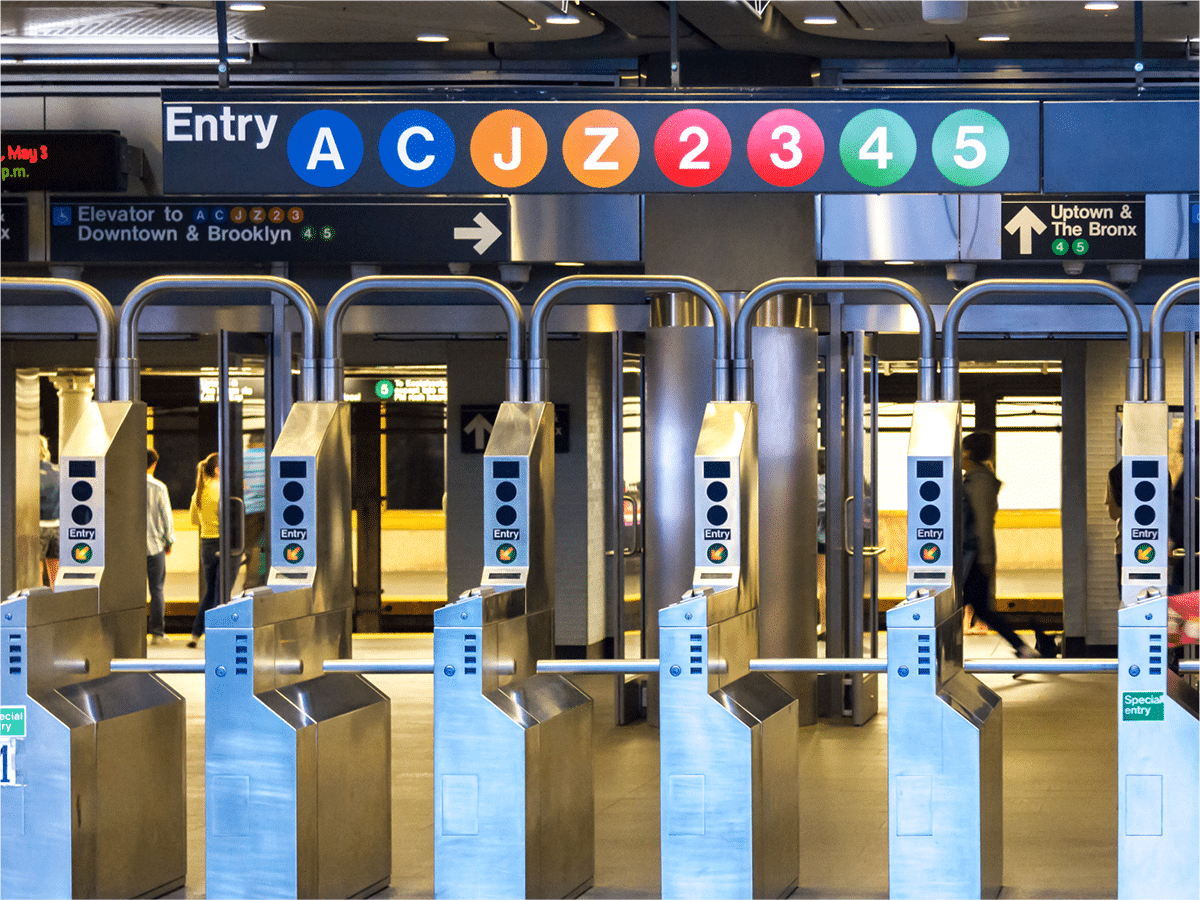
The Mechanics: Numbered lines (1, 2, 3, 4, 5, 6, 7) represent the former Interborough Rapid Transit (IRT) system. Lettered lines (A, B, C, D, E, F, G, J, L, M, N, Q, R, W, Z) represent the former BMT and IND systems.
The Evidence: Numbered trains are narrower and shorter than lettered trains. This physical difference prevents the cars from being used interchangeably on all tracks.
Market Context: Understanding these divisions helps passengers identify which platforms to use in shared station complexes.
The Feature: A cardinal direction system for subway navigation within Manhattan.
The Mechanics: “Uptown” trains travel north toward the Bronx or upper Manhattan. “Downtown” trains travel south toward Lower Manhattan or Brooklyn.
The Evidence: Street-level subway entrances often specify the direction of travel. Entering a “Downtown Only” entrance requires exiting and crossing the street to change directions.
Market Context: This logic simplifies navigation for those familiar with the Manhattan street grid.
The Feature: Multiple service tiers on the same subway trunk lines.
The Mechanics: Local trains stop at every station on a line. Express trains skip smaller stations to move passengers quickly between major hubs.
The Evidence: Express tracks are typically located in the center of the station. Local tracks are located on the outer edges. For example, the 4 and 5 trains run express in Manhattan, while the 6 runs local.
Market Context: Utilizing express service can reduce cross-borough travel time by 15 to 20 minutes.
The Feature: An enhanced bus rapid transit (BRT) tier for high-traffic corridors.
The Mechanics: SBS routes use dedicated lanes and off-board fare payment. Passengers tap OMNY at the bus door or a sidewalk kiosk before boarding.
The Evidence: SBS routes are identified by a “+” sign (e.g., M15-SBS) and blue lights on the front of the bus. They serve critical routes like 1st and 2nd Avenues in Manhattan.
Market Context: SBS travel times are approximately 10-20% faster than standard bus routes due to reduced dwell times.
The Feature: A waterborne transit system connecting the five boroughs.
The Mechanics: The ferry operates six routes covering over 60 nautical miles. It connects waterfront communities like Astoria, Rockaway, and St. George to Manhattan.
The Evidence: The ferry system is managed by the New York City Economic Development Corporation (NYCEDC). It requires a separate ticket from the subway, though OMNY integration is expanding.
Market Context: The ferry provides a scenic alternative for commuters in coastal neighborhoods.
The Feature: An aerial tramway connecting the Upper East Side to Roosevelt Island.
The Mechanics: The tram travels parallel to the Queensboro Bridge. It reaches an elevation of 250 feet above the East River.
The Evidence: The tram accepts OMNY and MetroCards. It departs every 7 to 15 minutes depending on the time of day.
Market Context: It is one of the few aerial commuter trams in North America.
The Feature: A direct water link between Lower Manhattan and Staten Island.
The Mechanics: The ferry runs 24/7 between the Whitehall Terminal in Manhattan and the St. George Terminal in Staten Island.
The Evidence: The service is free of charge. The trip takes approximately 25 minutes and covers 5.2 miles.
Market Context: It remains the most cost-effective way to view the Statue of Liberty from the water.
The Feature: A multi-modal transit application for live navigation.
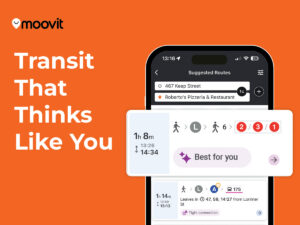
The Mechanics: Moovit aggregates MTA General Transit Feed Specification (GTFS) data with user-reported conditions. It provides step-by-step directions for subways, buses, and ferries.
The Evidence: The platform covers all major NYC transit agencies including the MTA, PATH, and NJ Transit. It alerts users to “Uptown” vs “Downtown” platform entrances to prevent navigation errors.
Market Context: Moovit is the primary tool for managing 2026 service diversions and weekend track work.
The Feature: Continuous public transit service.
The Mechanics: Most subway lines and major bus routes operate through the night. Frequency decreases significantly between 12:00 AM and 5:00 AM.
The Evidence: Late-night “shuttle” buses often replace subway segments during maintenance windows. These are marked with yellow signs at station entrances.
Market Context: NYC is one of the few global cities with a 24-hour subway system.
The Feature: Facilities for passengers with disabilities.
The Mechanics: Accessible stations feature elevators and AutoGate turnstiles. All NYC buses are equipped with “kneeling” technology and ramps.
The Evidence: Approximately 30% of subway stations are currently ADA-compliant. The MTA “Elevator and Escalator Status” page provides live updates on facility availability.
Market Context: Accessibility is a priority in the MTA’s 2025-2029 Capital Plan.
The Feature: Rail link between John F. Kennedy International Airport and the city.
The Mechanics: Passengers take the AirTrain JFK to either Jamaica Station (for the E, J, Z trains or LIRR) or Howard Beach (for the A train).
The Evidence: The AirTrain costs $8.50 as of early 2026. This is paid via OMNY or MetroCard at the exit/entrance to the airport network.
Market Context: This route avoids the heavy traffic common on the Van Wyck Expressway.
The Feature: Bus-to-subway links for LaGuardia Airport (LGA).
The Mechanics: The Q70 LaGuardia Link SBS connects to the 7, E, F, M, and R trains at 74th St-Broadway. The M60-SBS connects to multiple Manhattan subway lines.
The Evidence: The Q70 SBS is currently free to all passengers to encourage transit use. The M60-SBS requires a standard OMNY tap.
Market Context: These bus routes provide the only public transit access to LGA until future rail projects are completed.
The Feature: Interstate rail connection to Newark Liberty International Airport (EWR).
The Mechanics: Passengers take NJ Transit or Amtrak from New York Penn Station to the Newark Liberty Airport Station. From there, the AirTrain EWR connects to the terminals.
The Evidence: NJ Transit tickets include the AirTrain fee. A one-way trip from Manhattan typically costs approximately $16.00.
Market Context: This is the fastest way to reach Newark during peak commute hours.
The Feature: Automated cost savings for frequent riders.
The Mechanics: OMNY provides a free transfer between subways and buses within a two-hour window. Additionally, after 12 paid rides in a week, all subsequent rides are free.
The Evidence: The “weekly cap” resets every Monday at midnight. This replaces the traditional 7-day Unlimited MetroCard.
Market Context: Fare capping ensures that casual users do not overpay compared to monthly pass holders.
| Service Type | Fare (OMNY/Single) | Notes |
|---|---|---|
| Subway & Local Bus | $2.90 | Includes 2-hour transfer window |
| Express Bus | $7.00 | Direct routes between boroughs |
| Weekly OMNY Cap | $34.00 | Free rides after 12 taps |
| Staten Island Ferry | Free | No ticket required |
| JFK AirTrain | $8.50 | Paid at Jamaica or Howard Beach |
The most effective way is using the subway for north-south travel and buses for crosstown trips. Use Moovit to identify real-time service changes. Pay using OMNY by tapping your phone or card at the turnstile.
Take the 1 train to South Ferry or the 4/5 trains to Bowling Green. From there, walk to Battery Park to catch the Statue City Cruises ferry. Alternatively, the Staten Island Ferry provides a free view of the statue.
Take NJ Transit from New York Penn Station to the Newark Liberty Airport Station. This rail link avoids Holland Tunnel traffic. The total travel time is approximately 25 to 30 minutes.
Check the live countdown clocks in stations or use a transit app. Moovit provides real-time arrival data and service alerts directly from the MTA. This is essential for navigating weekend track work.
Yes, OMNY is available on all MTA subways and buses. It is also accepted on the Roosevelt Island Tram and the PATH system. Most regional rails like LIRR still require separate mobile tickets.
The New York transit landscape in 2026 is defined by the total digitization of fare payment and real-time navigation. The OMNY system has successfully streamlined the boarding process, while the MTA continues to modernize station accessibility and signal technology.
Despite these advancements, the complexity of the 24/7 schedule and frequent maintenance diversions remains a challenge for the uninitiated. Success in the NYC transit environment requires a shift from static maps to dynamic, data-driven navigation tools like Moovit. While the subway remains the backbone of city movement, the integration of ferries and enhanced bus services offers a more resilient network for the future.